
ORINS Membrane–PE
PE Process Separation Ultrafiltration Series
The PE series combines PES chemistry with a 34 mil feed spacer across multiple molecular-weight cut-off grades for concentration, desalination and fractionation.
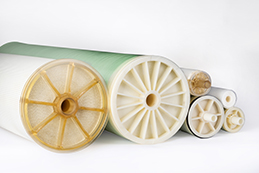
Polymeric membranes portfolio · Category image
PRODUCT OVERVIEW
Characteristics
The PE family is a spiral-wound PES process-separation membrane series for high-value aqueous feeds. Graded MWCO options support macromolecule retention, small-solute passage, desalination, concentration and fractionation from screening through scale-up.
- Stable PES chemistry with broad feed compatibility
- PE1 through PE5 provide graded MWCO selection
- 34 mil feed spacers help reduce fouling in complex feeds
- Precision winding and low permeate resistance support efficient operation
TECHNICAL DATA
Specifications and operating conditions
| Element | Material | Active area | MWCO | Feed spacer | Application focus |
|---|---|---|---|---|---|
| PE1-8040 | PES | 365 ft² / 34 m² | 1,000 Da | 34 mil | Fine retention of peptides and macromolecules |
| PE2-8040 | PES | 365 ft² / 34 m² | 3,000 Da | 34 mil | Peptide concentration, desalination and fractionation |
| PE3-8040 | PES | 365 ft² / 34 m² | 5,000 Da | 34 mil | Protein and medium-molecular-weight concentration |
| PE4-8040 | PES | 365 ft² / 34 m² | 10,000 Da | 34 mil | Macromolecule retention and higher-flux separation |
| PE5-8040 | PES | To be confirmed | To be confirmed | To be confirmed | Extended series grade subject to feed validation |
PE1-PE4 values are taken from the available series manuals. Final PE5 performance data was not present, so the model is retained and clearly marked for confirmation.
Reference values and maximum limits do not establish a combined operating condition for every feed. Confirm selection and operating conditions for the actual duty.
APPLICATIONS
Typical applications
- Peptide concentration and desalination
- Protein and enzyme separation
- Macromolecule retention
- Process fractionation and scale-up validation
SELECTION
Validate with your feed
Bench or pilot testing should confirm target rejection, flux, pressure drop, fouling and cleaning recovery before scale-up.
Testing & scale-upOPERATION
Operating guidance
Confirm feed and pretreatment
Check composition, solids, viscosity, temperature, pH and oxidant residue; validate complex feeds at bench or pilot scale.
Fill and vent at low pressure
Fill with a compatible medium and remove air from the pressure vessel before applying operating pressure.
Ramp to stable operation
Increase pressure and circulation gradually while recording flux, rejection, pressure drop and temperature.
Monitor fouling and clean
Use a compatible cleaning program when normalized flux declines or pressure drop rises; avoid oxidants and unverified chemicals.
Shutdown and preservation
Keep wetted elements wet. For extended shutdown, preserve with 1.0% food-grade sodium bisulfite prepared in RO permeate and apply suitable freeze protection.